
Moisture control
Crawl Space Encapsulation in South Carolina
Encapsulation seals a crawl space off from soil moisture and outdoor humidity, then keeps the sealed space dry with mechanical humidity control. In a humid state like South Carolina, that combination is what makes the difference.
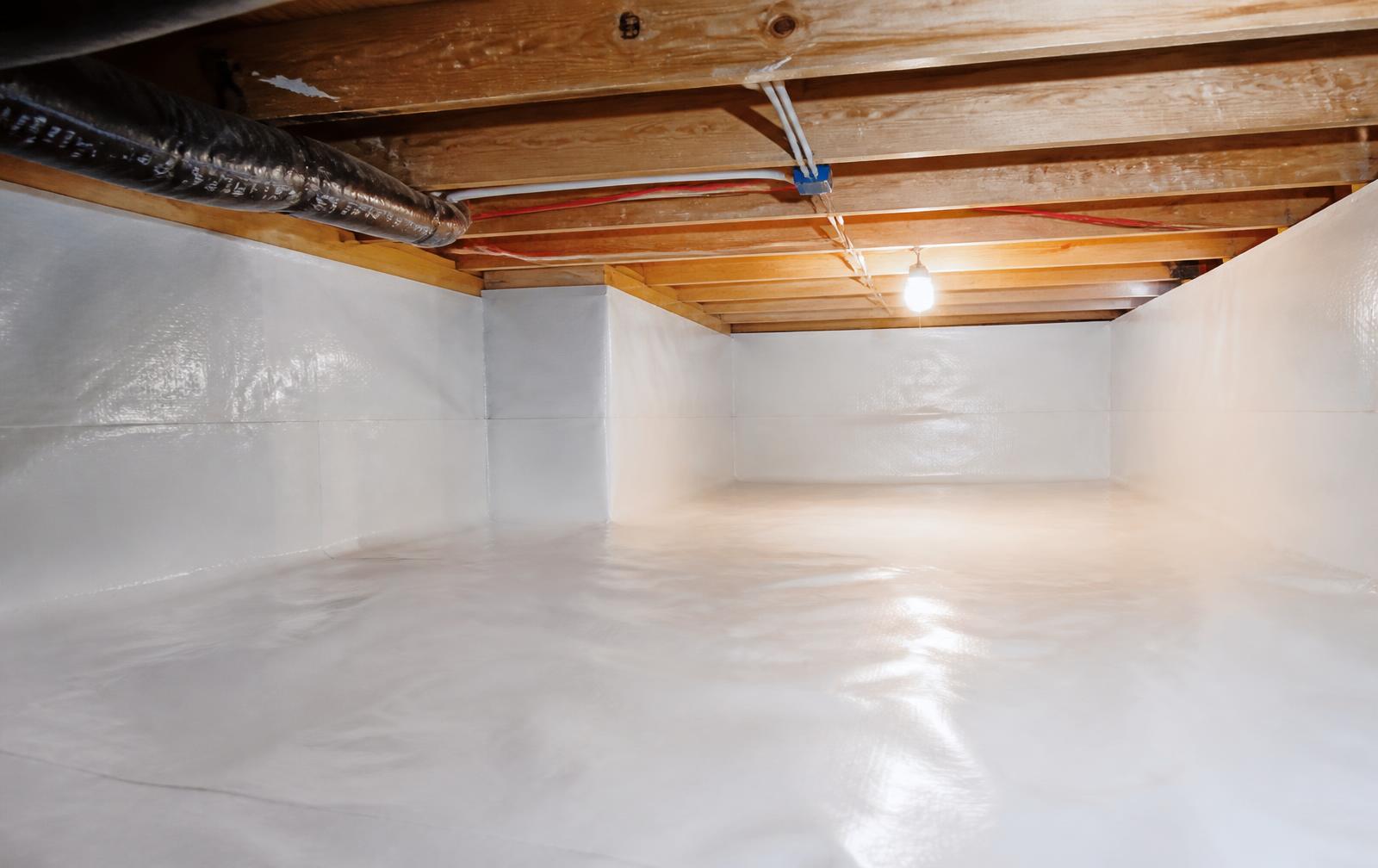
What a complete encapsulation includes
Ground liner / vapor barrier
A reinforced liner is installed across the entire soil surface, with overlapped and sealed seams so vapor cannot pass between sheets. Thickness and reinforcement are chosen based on how much foot traffic the space will see and how rough the ground is.
Wall and pier treatment where appropriate
Where foundation conditions allow, liner is carried up the interior of the foundation wall and around piers and terminated with mechanical fasteners and sealant. A termite inspection gap is normally maintained at the top of the wall so wood and masonry remain visible for inspection.
Vent and penetration sealing
Foundation vents, crawl space doors, rim joist gaps and plumbing or wiring penetrations are sealed so humid outside air stops moving through the space. This step is what converts a vented crawl space into a conditioned-adjacent one.
Humidity control
A sealed space still needs a way to shed moisture. Most encapsulations in South Carolina pair the liner with a crawl space dehumidifier sized to volume, with a condensate line routed to drain.
Drainage where needed
If water enters the crawl space, drainage and a sump system are installed under or alongside the liner. Sealing over active water does not solve the problem — see wet crawl space repair.
Comparison
Vapor Barrier vs Full Crawl Space Encapsulation
Both start with covering the soil. The difference is how far the system goes, and whether humidity is actively controlled.
| Element | Vapor barrier only | Full encapsulation |
|---|---|---|
| Soil covered | Yes, liner over the ground | Yes, heavier reinforced liner |
| Seams sealed | Sometimes lapped only | Overlapped and sealed |
| Foundation walls / piers | Not covered | Lined and terminated where appropriate |
| Vents and penetrations | Left open | Sealed |
| Humidity control | None | Dehumidifier sized to the space |
| Drainage integration | Rarely | Where water is present |
| Typical use | Dry crawl space, moderate vapor issue | Humid, damp or previously wet crawl space |
A liner alone can be the right call in a dry crawl space with a modest vapor problem. When humidity readings stay high, insulation is failing, or growth is visible on framing, the sealed-plus-dehumidified approach is usually what changes conditions. More on vapor barrier installation.
Requirements
South Carolina crawl space requirements, in general terms
Residential construction in South Carolina is governed by state-adopted building codes, which are enforced locally by county and municipal building departments. In broad terms, those codes address crawl space ground cover, ventilation, and the conditions under which a crawl space may be closed and mechanically conditioned rather than vented.
Practical implications homeowners should know about:
- Ground vapor retarders and minimum access provisions are standard expectations for crawl spaces.
- A closed crawl space is generally expected to have a means of moisture removal — mechanical dehumidification or supply air — rather than simply being sealed shut.
- Combustion appliances, dryer venting and gas piping in a crawl space affect what may be sealed and how.
- Permit requirements and inspection practices vary by jurisdiction, including within the Charleston, Columbia and Greenville areas.
- Termite inspection clearance at the top of foundation walls is commonly required to remain visible.
Requirements change and interpretation is local. Confirm specifics with your local building department, or ask during the inspection so the proposed system matches what your jurisdiction expects.
Encapsulation in South Carolina markets
Free crawl space inspection
Not sure whether a liner or full encapsulation fits your home?
A free inspection documents water, humidity, vapor barrier condition, wood and support issues before anyone talks about price.
- · Repair options based on actual conditions under the home
- · Clear explanation of moisture, drainage and structural findings
- · Serving the Lowcountry, Grand Strand, Midlands, Pee Dee and Upstate regions of South Carolina.