Core service
Crawl Space Repair in South Carolina
Crawl space repair covers everything from water and vapor control to the wood carrying your floors. Most South Carolina crawl spaces need two or three of these items addressed together, in the right order.
What crawl space repair includes
Repair work is sequenced by cause. Water entry is handled before sealing, sealing before humidity control, and moisture is stabilized before or alongside any structural work — otherwise new wood is installed into the same conditions that damaged the original framing.
Standing water and drainage
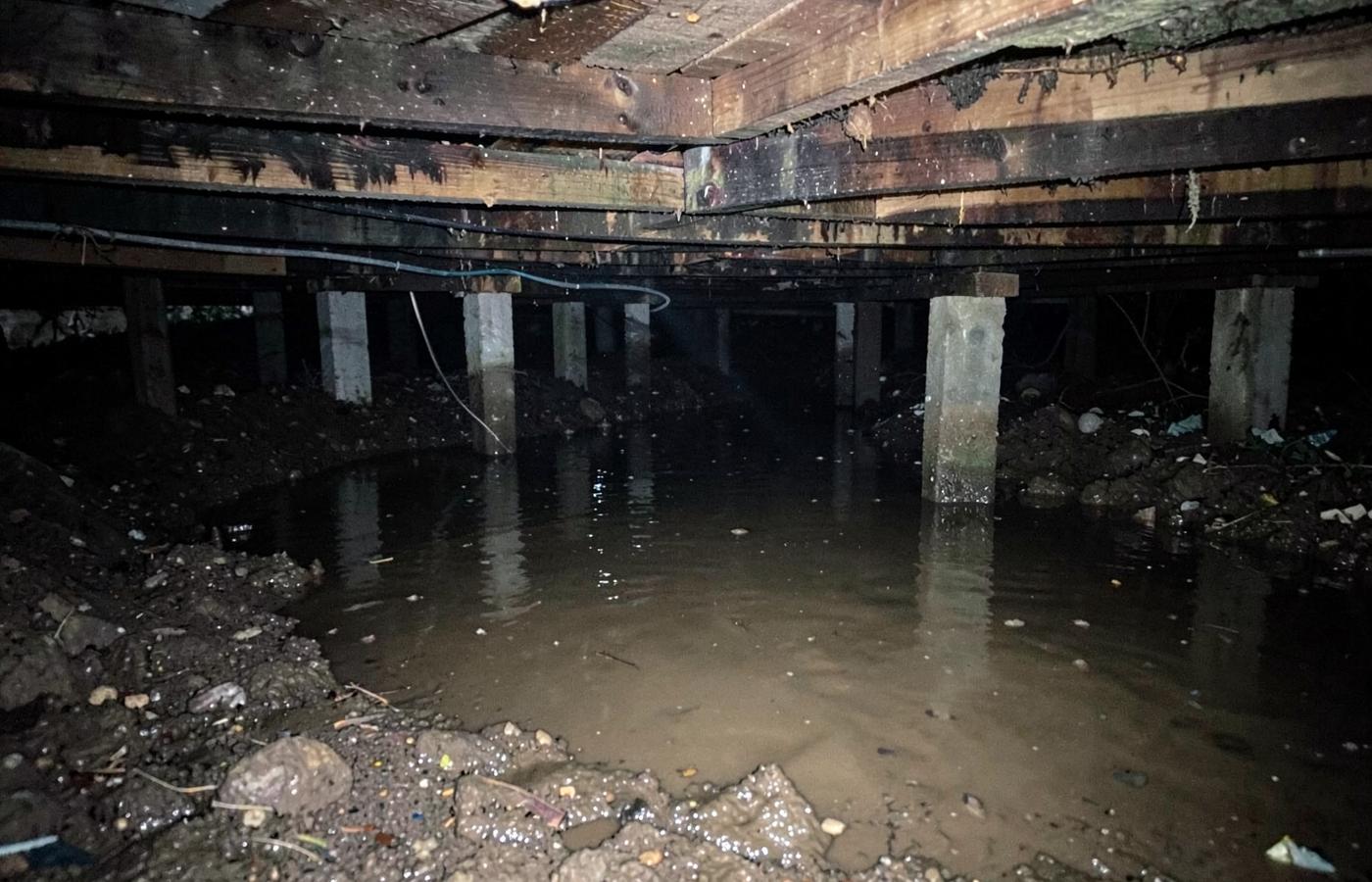
Water reaching the crawl space usually arrives from surface runoff, foundation wall seepage, or a high water table. Repairs may include correcting exterior discharge points, interior drainage trenching, and a sump pump where gravity drainage is not possible. See waterproofing and drainage for how these systems are built.
Damaged or missing vapor barriers
Thin construction-grade plastic tears, shifts and leaves large sections of soil exposed. Replacing it with a properly lapped, sealed liner is often the single highest-value repair in a dry-but-humid crawl space. Full details on the vapor barrier page.
High humidity and musty odors
Once the ground and openings are sealed, humidity is managed mechanically. A crawl space dehumidifier sized to the volume of the space holds relative humidity in a range that discourages growth on wood and keeps odors from moving into living space.
Wood damage and floor movement
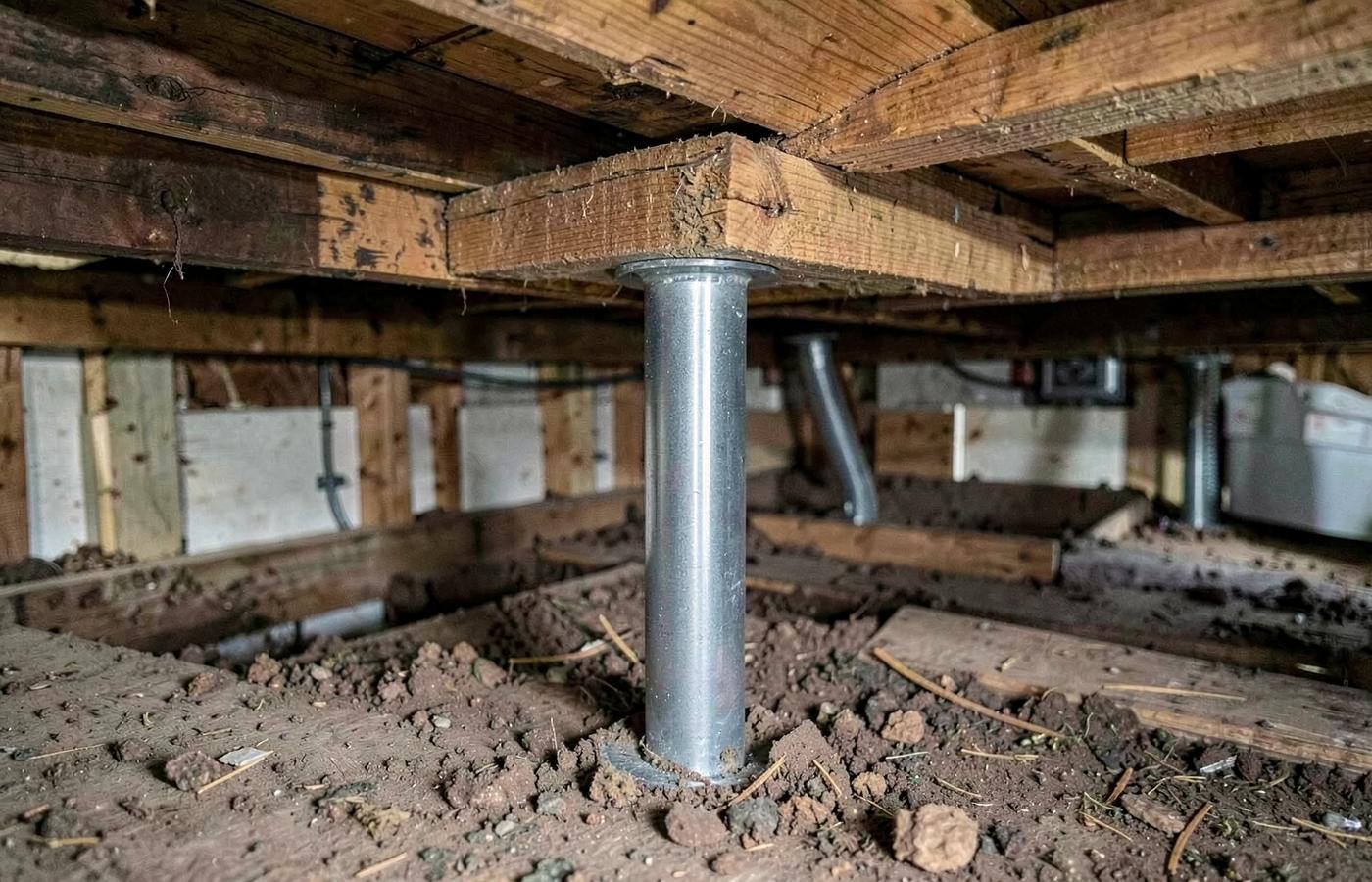
Long-term moisture reduces the strength of joists, beams and subfloor sheathing. Where wood has deteriorated, options include sistering joists, reinforcing or replacing beams, and adding or correcting supports. That work is covered on the structural repair and sagging floor repair pages.
Encapsulation as the finished condition
When the space is dry and the wood is sound, encapsulation keeps it that way by isolating the crawl space from soil moisture and outdoor humidity.
Order of operations
Why sequence matters more than product choice
- 1. Identify and interrupt the water source, inside and outside the foundation.
- 2. Remove debris, failed insulation and displaced plastic.
- 3. Address deteriorated wood and support deficiencies.
- 4. Install the sealed liner and seal openings.
- 5. Add humidity control and verify readings after work is complete.
How it works
Three steps from question to a written option list
1. Tell Us What You Are Seeing
Submit the short form with the address and a quick description of the problem — water, humidity, odor, soft floors or an unknown issue.
2. Inspect the Crawl Space
We review visible water, moisture and humidity, vapor barrier condition, drainage around the home, wood condition and structural concerns.
3. Review Repair Options
You receive recommended next steps and pricing based on the actual conditions documented under the property.
Free crawl space inspection
Have the crawl space looked at before choosing a repair
A free inspection documents water, humidity, vapor barrier condition, wood and support issues before anyone talks about price.
- · Repair options based on actual conditions under the home
- · Clear explanation of moisture, drainage and structural findings
- · Serving the Lowcountry, Grand Strand, Midlands, Pee Dee and Upstate regions of South Carolina.