Upstate market
Crawl Space Repair & Encapsulation in Greenville–Spartanburg, SC
Upstate crawl spaces behave differently from coastal ones. Clay-heavy Piedmont soils hold water against foundations and release it slowly, so drainage and grading questions come up alongside humidity control.
Upstate soil and site conditions
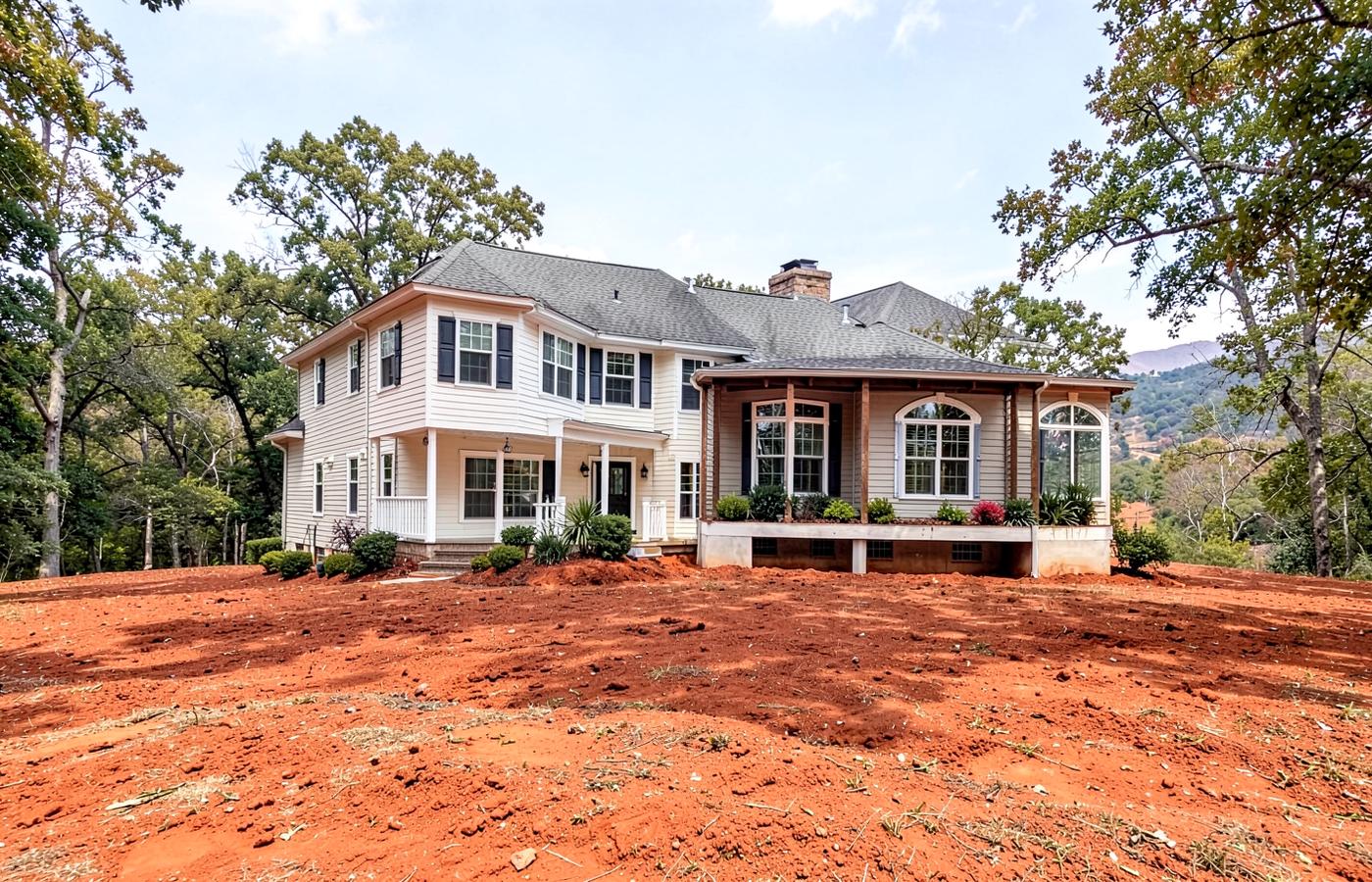
Much of the Greenville–Spartanburg corridor sits on red clay. Clay has low permeability, so water that lands near a foundation moves slowly and stays in contact with the wall. After a multi-day rain, that saturated soil finds its way through mortar joints and at the wall–footing junction, and crawl space soil stays damp long after the surface dries.
Sloped lots add a second pattern. Water moving downhill through soil reaches the uphill foundation wall and enters there, which is why the wet side of an Upstate crawl space is often predictable once you look at the grade outside.
Summer humidity is real here too, just usually a step below coastal levels. Vented crawl spaces still take on moisture through openings, and bare soil still contributes vapor.
Common findings in Greenville, Spartanburg, Greer and Anderson
- Damp or muddy clay soil in the crawl space with no standing water
- Seepage staining on block walls on the uphill side of the home
- Elevated humidity in summer with condensation on ducts
- Wood posts settled into soil, or footings that were never poured
- Bouncy or sloping floors over long spans
- Old thin plastic torn and pushed aside from service access paths
What Upstate scopes usually include
- Exterior water management first — discharge routing and grading corrections, then targeted interior drainage along the wet wall
- A sealed vapor barrier across clay soil, which holds moisture more stubbornly than sandy soil
- Encapsulation with vent sealing and a dehumidifier sized to the load
- Floor support work where framing has moved — structural repair and sagging floor repair
- A sump pump only where the site cannot drain to daylight — many sloped Upstate lots can
Cost context
Upstate projects often fall inside the statewide $3,250–$7,250 encapsulation range when the crawl space is damp rather than wet. Adding perimeter drainage, treatment or structural work moves totals toward the $7,000–$11,000+ band. Sloped lots can reduce cost by removing the need for pumping. See the full cost page.
Nearby communities
Upstate coverage
Serving Greenville and Spartanburg along with Greer, Anderson, Easley and Simpsonville, plus surrounding Upstate communities.
FAQ
Upstate crawl space questions
How does Upstate clay soil affect a crawl space?
Clay drains slowly and holds water against foundation walls after rain. That keeps exterior soil saturated longer, which favors seepage through block joints and keeps crawl space soil damp even when no water is visibly standing.
My lot slopes, so why is my crawl space still damp?
A slope helps water leave the surface but does not stop subsurface flow. On hillside lots, water often moves downhill through soil and reaches the uphill foundation wall. Interception drainage on that side is frequently the fix.
Do Upstate homes need dehumidifiers, or is it only a coastal thing?
Summers here are humid enough that sealed crawl spaces generally benefit from mechanical drying. The load is often lower than on the coast, which can mean a smaller unit rather than none.
Are bouncy floors common in Greenville and Spartanburg homes?
They come up regularly in older housing, usually tied to long spans, wood posts on inadequate footings, and moisture-affected joist ends. Elevation readings plus a look at bearing points tell the real story.
Free crawl space inspection
Get a free crawl space inspection in the Upstate
A free inspection documents water, humidity, vapor barrier condition, wood and support issues before anyone talks about price.
- · Repair options based on actual conditions under the home
- · Clear explanation of moisture, drainage and structural findings
- · Serving the Lowcountry, Grand Strand, Midlands, Pee Dee and Upstate regions of South Carolina.