
Moisture control
Crawl Space Vapor Barrier Installation
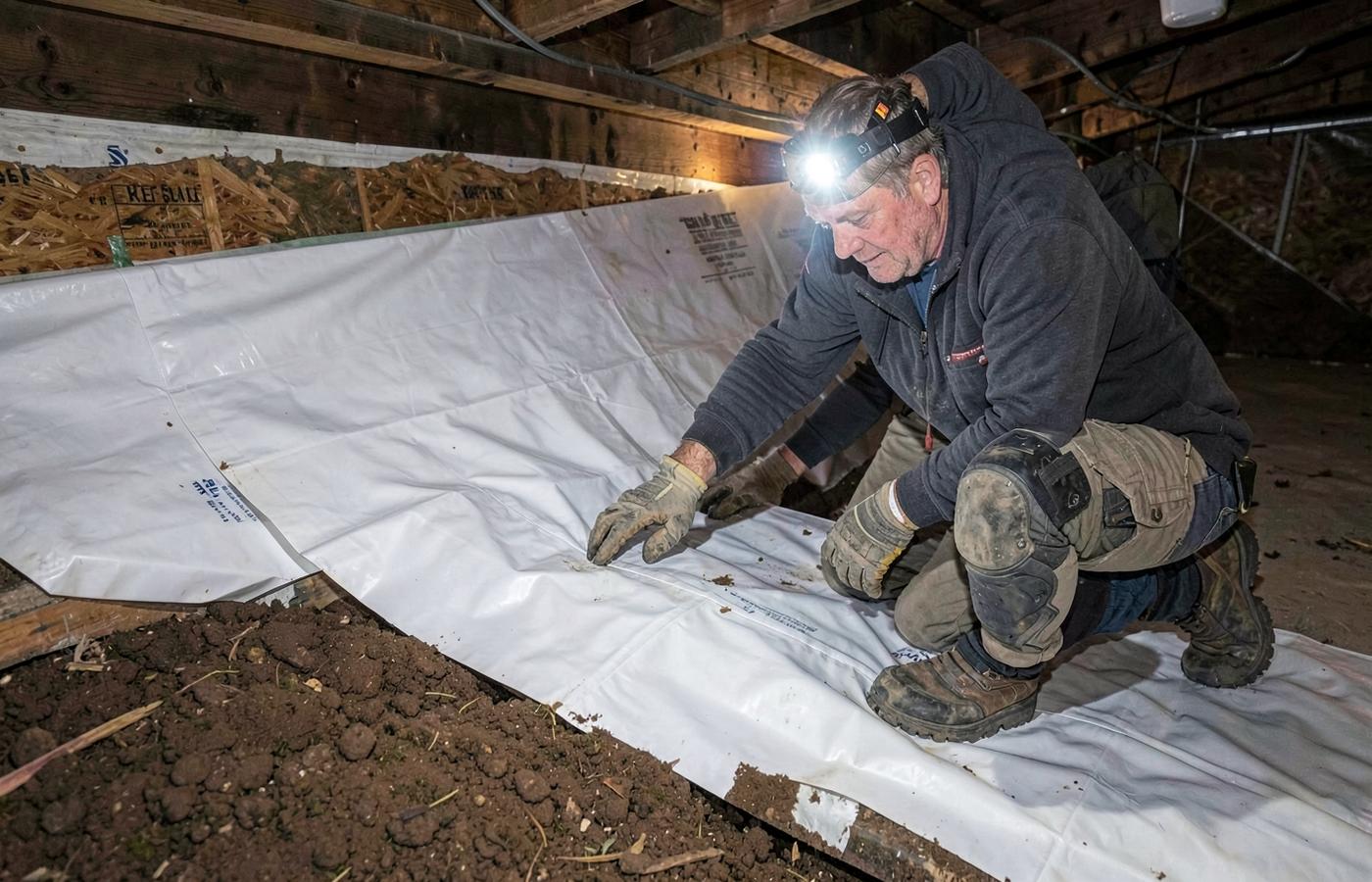
A vapor barrier is the liner that separates crawl space air from the soil underneath it. Done properly, it removes the largest continuous moisture source in most South Carolina crawl spaces.
Why exposed soil matters
Soil under a house is rarely dry. Even when the surface looks dusty, moisture continues to move upward from deeper soil and evaporates into the crawl space. That process runs day and night, and it does not require standing water or a leak to keep a crawl space damp.
Once that vapor is in the air, it condenses on the coolest surfaces it finds — duct exteriors, piers, and the underside of the subfloor — and raises wood moisture content across the framing.
What a proper installation involves
Preparation
Debris, old torn plastic, construction leftovers and damaged insulation are removed first. Sharp objects and high spots are addressed so the liner is not punctured during or after installation.
Seams
Sheets are overlapped generously and sealed rather than simply laid edge to edge. Unsealed seams are the most common reason a "new vapor barrier" fails to change humidity readings.
Wall and pier transitions
Where the system is intended to control humidity, the liner is carried up foundation walls and around piers and mechanically fastened with sealant, leaving termite inspection clearance visible near the top of the wall.
Thickness and reinforcement
Light construction poly tears easily. Reinforced liners hold up better where anyone will crawl through the space for HVAC, plumbing or pest service — which matters if the space is used at all.
How this relates to full encapsulation
A vapor barrier is one component of crawl space encapsulation. Encapsulation adds vent and penetration sealing plus active humidity control. If the crawl space is dry but the soil is bare, a liner may be sufficient. If humidity stays high, growth is visible on joists, or the space has been wet, a liner alone will usually underperform.
When water actively enters the crawl space, drainage comes first — see waterproofing and drainage and wet crawl space repair.
Signs a liner has failed
When existing plastic is no longer doing its job
Free crawl space inspection
Have the existing liner and humidity checked first
A free inspection documents water, humidity, vapor barrier condition, wood and support issues before anyone talks about price.
- · Repair options based on actual conditions under the home
- · Clear explanation of moisture, drainage and structural findings
- · Serving the Lowcountry, Grand Strand, Midlands, Pee Dee and Upstate regions of South Carolina.